
Organisations continue to spend large amounts of money on leadership training, coaching and mentoring, yet too often there is little tangible change. The leaders who led us yesterday are still leading us today, often in the same way.
Many are still trying to recreate the pre-2020 workplace, where physical presence gave them a sense of control, visibility and authority. But the world of work has changed dramatically.
These same leaders are now expected to lead distributed teams, navigate constant disruption and guide organisations through the AI era, often without changing the mindset or behaviours that shaped their earlier success.
The result is low trust, disengagement, declining psychological safety, resistance to change and employees who no longer believe that speaking up will make any difference.
The problem is not that these leaders are incapable of change. Most are capable. The problem is that they have not yet recognised that they may be part of what needs to change.
Education alone is not enough
We can get leaders into classrooms, workshops, seminars, and coaching sessions about what leaders today need.
The trouble is, we can talk about psychological safety, and the leader still makes people feel unsafe speaking up. We can discuss empowerment, and the leader micromanages. We can advocate for accountability, but the leader still points the finger at others. We can explore respect, and the leader continues to talk over others.
Education can show leaders what good leadership looks like. But it is self-awareness that will drive the desired outcomes.
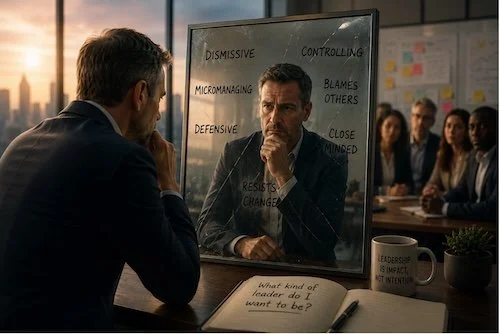
We need leaders to get a wake-up call so they realise they need to change. A wake-up call that says you are not serving yourself or your team with your current leadership style. A wake-up call that shouts, “You are part of the problem.”
We can pour as much money as we like into attempts to improve the leadership in an organisation, but if people are not willing to change, it is wasted.
Carrie-Ann Barrow, in an article for Forbes, highlighted how this misdirected investment can impact employees.
“When leaders aren't self-aware, coaching and team building don't just underperform; they can also quietly backfire. Team members watch a leader attend training, then return unchanged, and the message they receive is that the effort was theater. That's demotivating. It erodes the very trust the program was designed to build.”
The blind spots
It can be frustrating as an onlooker when leaders fail to see how they need to change. To many, the changes seem obvious. We need leaders with integrity, authenticity, honesty, empathy, creativity, emotional intelligence, and adaptability, and the list goes on.
“Why can’t they see it?” we scream.
Many leaders fail to see the need for change because their power insulates them from honest feedback. Employees do not feel safe to air their feelings, and even when asked for feedback, they will filter what they say so it doesn’t come back to bite them.
Their past success as a leader is reinforcing their outdated behaviours. Leaders confuse intention with impact when they judge their behaviour by what they meant to do rather than by how it affected employees.
They may believe the leadership problems are elsewhere in the organisation.
The reluctance
Even when a leader becomes aware of a need for change, they can be reluctant to do so. They are aware but not willing.
The process of learning, unlearning, and relearning can be a scary one and will take people out of their comfort zone.
Leaders may fear no longer being seen as the expert. We are asking them to question behaviours, beliefs and practices they have spent years developing and that may have contributed to their previous success. They are riding on the comfort of their past success.
The habits that helped them reach their current position may now be the very habits they need to relinquish. Confirmation bias may lead them to seek evidence that their old leadership style is still effective while ignoring new realities. Their patterns of thinking and behaviour have become deeply embedded over time.
As Adam Grant said, “It takes curiosity to learn. It takes courage to unlearn. Learning requires the humility to admit what you don't know today. Unlearning requires the integrity to admit that you were wrong yesterday. Learning is how you evolve. Unlearning is how you keep up as the world evolves.”
That is no small ask or undertaking. We are asking these leaders to take a large leap of faith.
The cost
Ineffective leadership has a measurable cost. Employees disengage when they are repeatedly expected to adapt to poor leadership while the leader remains unchanged.
Trust declines, psychological safety weakens, decisions slow down, and people become less willing to raise concerns or offer ideas. Good employees leave, productivity suffers, and leadership development loses credibility.
When there is no willingness to change, development initiatives become performative. The organisation spends money, leaders attend programs and employees see no difference in the behaviours that affect them every day.
The wake-up call
In my book Be REMARKABLE! Learn to Unlearn: The New Leadership Mindset, I describe the leader’s journey in three parts – Separation, Initiation, and Return. The first step in the Separation stage is the wake-up call.
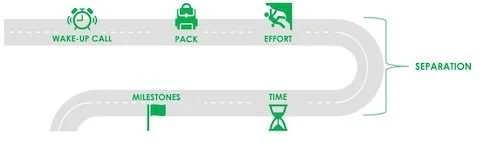
The journey cannot commence without the wake-up call. This is the leader’s recognition of how their current behaviours hinder the success of their teams and the organisation. They acknowledge that their current learnings no longer serve them and that they must unlearn and relearn.
The wake-up call is not humiliation, confrontation for its own sake or telling a leader they are failing. It is an experience that makes the gap between intention and impact too visible to dismiss.
The wake-up call must be credible, specific and connected to the consequences.
Some wake-up calls will simply happen when a leader has that aha moment. It could be attending a conference, reading a leadership book or article, or listening to a podcast.
Some wake-up calls may need an intentional trigger.
Intentional triggers for a wake-up call
Many triggers can be used, and the ones that you use must meet both the needs of the leader and the context in which they find themselves. Think carefully about which triggers are best suited to achieve change.
Unfiltered employee feedback
You can use anonymous surveys, listening sessions, exit interviews, stay interviews and facilitated conversations to reveal what employees are actually experiencing.
The critical issue is not simply collecting feedback. Leaders must hear patterns without dismissing them as isolated complaints or employee resistance.
Feedback that is collected but softened, filtered or withheld from the leader cannot create a wake-up call.
Behaviour-based 360-degree feedback
Behaviour-based 360-degree feedback gathers perspectives from managers, peers, direct reports and, where relevant, clients. It provides a broader view of how others experience the leader’s behaviour.
The key is to move beyond broad feedback ratings such as “good communicator” or “supportive leader” and ask about the observable behaviours. These could include:
Do people feel safe challenging this leader?
Does the leader listen before deciding?
Are mistakes used for learning or blame?
Are decisions genuinely delegated?
Does the leader behave consistently under pressure?
When feedback is specific, it is harder to rationalise away.
Showing the gap between intent and impact
Leaders can often defend themselves through intention and use phrases such as “I was trying to maintain standards”, “I was only being direct”, “I wanted the team to move faster.”
The wake-up call comes when you show how the employees experienced those actions.
The leader sees intention; employees experience the impact. What the leader considers decisiveness, high standards or urgency may be experienced as control, fear, dismissal, confusion or lack of trust.
Connecting leadership behaviour to business outcomes
Some leaders may be more receptive to change when their behaviour is linked to business outcomes rather than presented only through emotional or cultural arguments.
Connect the leader’s behaviour, where possible, to:
· turnover
· absenteeism
· delayed decisions
· poor customer outcomes
· project failure
· reduced innovation
· low productivity
· escalating risk.
Where possible, make the financial cost of the behaviour visible. For example, the cost of a project failure or replacing a valued employee.
Using real stories rather than abstract data
Use real stories to show the impact of leadership behaviour. Data can show you the scale of a problem, but stories make the consequences human.
A carefully facilitated employee story can reveal how a leader’s behaviour affected confidence, performance, wellbeing or willingness to speak up.
Stories should be used responsibly. They are not used to shame the leader, but to make the human consequences real.
Observation in real situations
Allocate a coach or a trusted advisor to attend meetings, decision forums, workshops or team sessions and provide specific, behaviour-based feedback on what they observed.
For example, leaders may describe themselves as inclusive while repeatedly interrupting, closing debate or answering their own questions. Direct observation exposes the difference between self-perception and actual behaviour.
Leadership simulations and role reversal
You can put leaders into situations where they experience events from the employee perspective. Experiencing the situation can create insight that explanation alone cannot. The aim is not to embarrass the leader, but to allow them to experience the system from a position with less power.
These could include:
· being excluded from a decision
· receiving vague or contradictory direction
· being publicly overruled
· trying to raise a concern that is dismissed
· being held accountable without authority.
Peer reflection and accountability
Some leaders may be more receptive to honest reflection when it takes place with respected peers than from facilitators, coaches or employees.
Peer forums can make honest self-examination a routine part of leadership by creating a trusted environment in which leaders ask:
· What might I be contributing to this?
· What am I not seeing?
· How might my behaviour be affecting the team?
· What feedback am I avoiding?
· Where is there a gap between my intention and my impact?
· What do I need to stop, start or change?
The purpose of the forums is not for peers to judge one another. It is to create a trusted environment in which leaders can test their assumptions, recognise blind spots and hold one another accountable for change.
Moments of organisational consequence
Sometimes the wake-up call may arrive through a resignation, failed transformation, serious complaint, customer loss, poor engagement result or operational incident.
Organisations should not wait for a crisis to confront poor leadership. When one does occur, they must examine how leadership behaviour contributed to it rather than placing all the blame on individuals or external circumstances.
Recognition is not enough
A wake-up call creates awareness, but awareness alone does not change behaviour. Leaders must be willing to acknowledge their impact, identify what they need to change and accept accountability for doing so.
That may require an apology, a commitment to specific behavioural changes, ongoing coaching and regular feedback from the people affected by their leadership. Employees need to see evidence that the leader has listened and is acting differently.
Self-awareness without changed behaviour is simply better-informed inaction.
The wake-up call must lead to change
Education, mentoring and coaching will always matter, but they become effective only when leaders recognise that development is not about acquiring more tools to change everyone else.
It begins with the leader's willingness to ask, “What if I am part of the problem?”
The most powerful leadership development does not begin when leaders learn something new. It begins when they finally see something about themselves that they can no longer ignore.