Two Days at Home Is Not Flexibility
The Victorian Government could be about to make global history if the Equal Opportunity Amendment (Work from Home) Bill 2026 is passed. It would not only be the first state in Australia to guarantee the right to work from home legally, but also the world's first piece of legislation mandating a specific number of work-from-home days per week.
The intent sounds good
It is scheduled to take effect on 1 September 2026 for businesses with 15 or more employees. Small businesses (under 15 employees) have until 1 July 2027.
Premier Jacinta Allan argues that the working-from-home legislation will increase flexibility, save employees time and money, and enable more parents to work. She also says it is good for business. “Those who work from home are working nearly 20 per cent more hours than those who are working in the office full time.”
But good intent does not guarantee good design.
The danger: flexibility becomes compliance
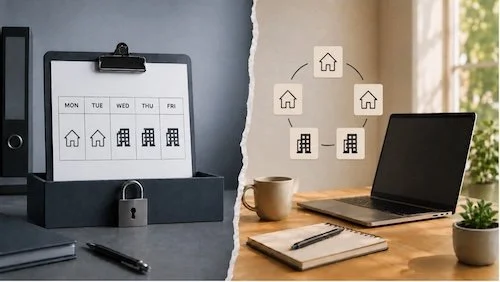
I believe the danger lies in the fact that two days of working from home become not a floor but a ceiling.
Employers who currently mandate that employees be in the office full-time will balk and grudgingly allow employees 2 days of working from home, and no more.
Employers who may be considering their flexible working model will retreat to the position, “The law says two days, so the other three are in the office.”
The two-day ceiling problem
The Karlene Chandler case is a useful warning. I wrote about the case last year in RTO Chickens Come Home to Roost.
Chandler, a long-serving Westpac employee with caring responsibilities, challenged the bank after it required her to attend the office despite her successful history of working remotely. The Fair Work Commission found in her favour, concluding that Westpac had not provided reasonable business grounds for refusing her flexible work request for five days of WFH.
The case matters because it was not simply about whether an employee could work from home for two days. It was about whether the employer had genuinely considered the person, the role, the evidence, the caring responsibilities, the commute, the work history, and the real business impact of remote work.
That is where a fixed two-day entitlement may fall short.
If Victoria’s proposed law gives eligible employees the right to work from home for two days, it may help some workers. But what happens when an employee’s circumstances justify more than two days? What happens when the evidence shows they can perform well remotely? What happens when office attendance adds little value yet imposes a high personal cost?
The risk is that some employers will say, “The law gives you two days. We have complied.”
That is the two-day ceiling problem. A legal minimum can quickly become a managerial maximum.
It’s not flexibility if it’s locked down
The Premier argues that the legislation protects employees from “Bosses who cling to outdated ways of working because they don’t want to give up control” and “Bosses who think being seen at a desk is more important than a parent getting home for dinner with their kids.”
The legislation may lock in an entitlement, but not true flexibility.
A fixed two-day arrangement is not the same as flexible work. True flexibility allows employees to choose where they work in a way that makes the most sense. Work is what they do, not where they go. They chose where they will be most productive, achieve desired outcomes, and meet the expectations of themselves and their employer.
True flexibility allows employees to manage their professional lives around their personal lives, not the other way around. It enables work patterns to respond to workload, personal and family needs, health, travel, work requiring concentration, work requiring in-person collaboration, client demand, and team priorities.
With the proposed legislation, the selection of the specific work-from-home days will begin with the employee. Still, the final decision will be reached through negotiation between the employee and the employer.
If an employee wants to change the specified days when circumstances change, they must do so with a written notice, and the employer then has 21 days to respond.
This is not flexibility; it is bureaucracy. For many employees, this will take away the flexibility of the arrangements they already have with their employer.
Employers will be legally required to show the allocated work-from-home (WFH) days if requested by authorised compliance bodies or through formal dispute mechanisms,
The law will not allow for handshake agreements, as it requires a formal paper trail. Failure to provide the WFH records could expose the organisation to compensation penalties.
When an employee submits their WFH notice, they must legally declare their remote work address. If they decide to work from a cafe, a library, or a regional town instead of their home, they must get approval for that specific location. Working from an unapproved location may be considered misconduct.
That is NOT flexibility.
Real-life flexibility does not follow a roster
The problem with a fixed two-day model is that real life does not organise itself neatly around nominated work-from-home days.
An employee may have an arrangement to work from home on Monday and Friday. But what happens when the need for flexibility arises on Wednesday? Not because they want time off. Not because they cannot work. Working from home that day would allow them to remain productive while managing a practical reality.
It could be a school meeting, a medical appointment, a transport disruption, a major delivery, a repair person coming to the house, extreme weather, or a day requiring deep focus without office interruption.
The employee asks for an additional WFH day next week. The employer could say, “You have already used your two days.”
The employee then must take annual leave, but it is not a leave issue. Often, the employee can still work a full and productive day. They simply need flexibility in where that work is done.
When this happens, the law has created a roster rather than flexibility.
Where is the flexibility when an employee needs to change their allocated WFH days due to a change in circumstances and can only do so via a written Work-From-Home-Notice, and the employer has 21 days to respond? Even if the response is positive, three weeks have passed. Sometimes, changes in circumstances do not give you that much notice!
That is the risk. A policy designed to protect flexible work could unintentionally make it more rigid. Rather than employees and their managers having sensible conversations based on the work, the circumstances, and the required outcome, the discussion may become a compliance exercise: which days were nominated, whether a written notice has been submitted, and whether the employer has had time to respond.
True flexibility is responsive. It allows people to adjust when the work demands it, when life demands it, and when better outcomes can be achieved without unnecessary friction.
Two days at home may be useful. But two fixed days are not the same as genuine flexibility.
The leadership issue
The real issue here is not whether there should be a two-day rule. The real issue is the leadership gap. The gap is filled with leaders who cannot lead when work is no longer defined by where you sit and leaders who equate presence with performance. It comprises leaders who measure hours over outcomes and leaders who do not know how to lead in 2026.
When leaders demand office attendance without a sound reason, that is not a flexibility problem. It is a leadership problem.
It often points to a need for power and control, narcissism, and over-inflated egos. The recent essay in the New York Times by Adam Grant, Marissa Shandell, and Courtney Elliott is a testament to the fact.
It points to leaders' inability to recognise that what served them yesterday no longer serves them and instead limits them and their teams. It is the blatant disregard of the need to unlearn and relearn.
Legislation may create an entitlement, but it cannot create good leaders. It cannot teach leaders to lead by outcomes. It cannot teach leaders to lead distributed teams effectively. It cannot make leaders trust their employees. It cannot replace the need for clear expectations, meaningful connections, fair decision-making and adult conversations about how and where work gets done.
Good leaders already know that some work is better done together and some work is better done alone. They know that collaboration, coaching, learning and team cohesion matter. They also know that focus, autonomy, well-being, and flexibility matter. The job of leadership is to balance those needs, not default to a blanket rule.
If there is a genuine reason for people to be in the office, leaders should be able to explain it. If there is no genuine reason, forcing attendance becomes control dressed up as culture.
This is why a fixed two-day model feels like a poor substitute for capable leadership. It may protect some workers from unreasonable employers, but it does not address the deeper issue: too many organisations still do not trust people to do their work unless they can see them doing it.
The better answer is not simply more rules. It is better leadership. It is leadership that is clear about outcomes, honest about business needs, respectful of employees’ lives, and mature enough to manage flexibility without turning it into a compliance exercise.
Good leaders do not ask “How many days have you been in the office?” Good leaders ask, “What work needs collaboration? What work needs focus? What outcomes are required? What do my employees need to do their best work? What does the team need?”
Money savings
The government has argued that the legislation will save employees money.
“It saves families money, giving Australians back on average $110 a week or $5,308 every year”, says the Premier of Victoria in her March report.
I agree that working from home can save money, but whether this legislation saves money depends on the context and how it changes behaviour. If employees already work from home two or three days a week, it will save them nothing. If employers use the two days as the ceiling rather than the floor, some employees may lose flexibility and incur higher commuting costs than they do today.
Arbitration and bureaucracy
One of the arguments for legislating the right to work from home is that it provides employees with protection when employers act unreasonably. That sounds fair, but what happens when an employee wants to change or challenge a decision?
The proposed process is not simple. Disputes would need to be addressed internally first. If they are not resolved, they may go to the Victorian Equal Opportunity and Human Rights Commission (VEOHRC) for conciliation. If conciliation fails, the matter may then go to the Victorian Civil and Administrative Tribunal (VCAT).
While that process may be appropriate for serious or repeated unreasonable conduct, it also illustrates how quickly a supposedly flexible arrangement can become formal, slow and legalistic.
Real flexibility should be practical and responsive. It should allow an employee and a leader to have a sensible conversation about the work, the circumstances, and the required outcome. If changing a work-from-home day, challenging a refusal, or seeking a different arrangement requires formal notices, internal escalation, conciliation and possible tribunal involvement, then flexibility has started to look more like dispute management.
Let’s not even consider the impact on potentially under-resourced, underfunded, and overloaded bodies such as VEOHRC and VCAT.
Genuine flexibility should be built on leadership with trust, clarity, outcomes and timely decision-making, not on employees having to escalate ordinary work arrangements through formal channels.
The alternative
Legislation should protect the right to request and negotiate flexible work, require employers to provide genuine business reasons for refusal, and prevent blanket return-to-office mandates without evidence. It should not prescribe a fixed pattern that becomes the default ceiling.
A better approach would protect employees from unreasonable refusals, require employers to provide evidence-based business reasons, and allow policies and practices to be challenged when they undermine genuine flexibility. But it should also invest in leadership capability, because the real failure is not the absence of a two-day rule; it is the absence of trust-based, outcome-focused leadership.
Maybe the alternative already exists? (Tongue in cheek)
If you take a complaint to the VEOHRC, a conciliator will suggest outcomes including:
an apology, statement of regret or acknowledgement of distress
changes to policies or practices
a commitment to provide equal opportunity training to staff
reinstating a person’s job (or terms of their job) or a service (or how it is delivered)
financial compensation.
Perhaps we should replace the proposed legislation with an avenue such as this, whereby employees who are not given true flexibility in their work can request that workplace policies and practices be changed, and there is a commitment to provide effective leadership training across the organisation!!
Close
Working from home is not the problem. Inflexible leadership is the problem.
Replacing one form of rigidity with another is not progress. If Victoria wants to protect modern work, it should protect genuine flexibility, which is based on outcomes, trust, role requirements and real-life circumstances.
Two days at home may sound like a win, but if it becomes the ceiling, the roster and the rulebook, employees may end up with less flexibility than they had before.